
Wood Kitchen Cabinets in 2026: How to Choose the Right Finish
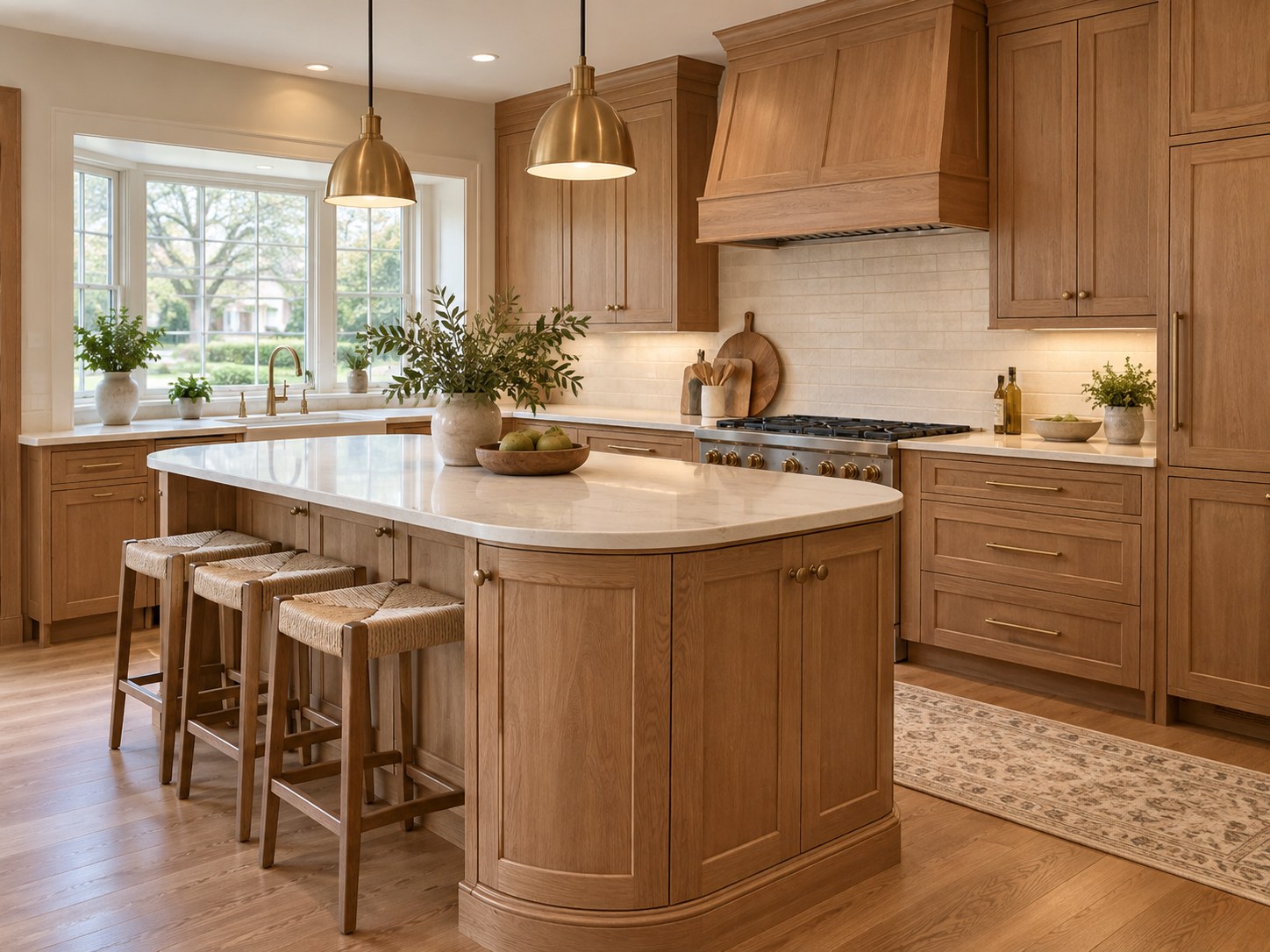 Design concept
 Wood cabinets lead Houzz's 2026 survey. Compare oak tones, samples, grain and mixed finishes before choosing cabinets for your Chicago-area kitchen.
Design concept illustration. This is not a photograph of an ADS project.
Will a wood kitchen look warm and current, or like the cabinets you are trying to replace?
The difference often comes from the combination of grain, finish, door profile and surrounding surfaces. A medium oak door next to a quiet cream counter reads differently from the same door next to a busy brown backsplash. For a kitchen remodel in Buffalo Grove or Arlington Heights, start with your room’s light and existing floors before selecting a stain name.
Short answer. Wood kitchen cabinets are a current option, but the useful decision is how the grain, undertone and finish work with your floors and light. Approve a complete cabinet-and-counter combination before ordering, not an isolated stain chip.
What actually changed in 2026
In the 2026 U.S. Houzz Kitchen Trends Study, wood was selected by 29% of surveyed kitchen renovators, narrowly ahead of white at 28%. The survey covered 1,780 U.S. Houzz users and was fielded in July 2025. Those are national survey results, not a measure of what every Chicago homeowner wants.
The useful takeaway is permission to consider wood if it suits the house. It is not a reason to remove well-functioning white cabinets. A kitchen should still feel comfortable after the next trend report arrives.
Choose the floor and cabinet relationship first
If the existing hardwood stays, bring an actual floor sample or a removable register cover to the cabinet appointment. Phone photographs can hide orange, pink and green undertones. You do not need an exact match. You do need a deliberate relationship: a lighter cabinet against a deeper floor, for example, or painted perimeter cabinets with one wood island.
When two wood surfaces are almost the same color but have different undertones, the mismatch can dominate the room. Put samples together vertically and horizontally, the way they will actually be installed. Include the countertop, backsplash and wall paint in that comparison.
Ask what the sample represents
- Species and cut. Ask which wood and grain selection the quote includes. A stain color alone does not specify the appearance.
- Door construction. Confirm which surfaces are solid wood, veneer or other materials, including end panels and exposed cabinet sides.
- Variation. Request photographs or several samples showing the accepted range of grain and color, rather than judging a whole kitchen from one unusually even door.
- Finish and care. Obtain the cabinet manufacturer’s cleaning instructions and repair options before committing.
- Visible edges. Review fillers, toe kicks, island ends and tall appliance panels together. These pieces are part of the design.
Use a full-size door in your own light
Set a sample upright near the actual cabinet wall. Look at it in morning light, under the evening fixtures and beside the neighboring room. Leave it there for several days if the supplier allows. A finish that looks balanced in a bright showroom can feel heavier in a north-facing kitchen.
Keep the first comparison small. Two wood options and one painted alternative are easier to evaluate than twelve stain chips. If you like a wood finish but the room feels busy, simplify another large surface before abandoning the wood. A quieter backsplash or less dramatic countertop can make the whole scheme calmer.
Where mixed finishes work best
A wood island and painted perimeter create a clear focal point. Wood base cabinets with lighter uppers can also work, especially where tall storage is limited. Draw the boundaries on an elevation, not just a mood board. Random changes at individual cabinets tend to look accidental.
Before buying new boxes, compare this with refacing versus replacement. A better finish cannot correct a poor layout, but a full replacement is not automatically necessary when the existing layout works.
Three sample combinations worth comparing
Make a small comparison board that tests a different design decision in each version. Repeating almost identical beige samples will not tell you whether the room needs contrast or a different material.
- Light oak with cream. Put the cabinet against a quiet cream counter and the actual flooring. Check whether the combination still has definition under your evening lights.
- One walnut feature. Compare a walnut island or tall cabinet with a lighter painted perimeter. The question is where the eye should settle, not whether every surface must be wood.
- Wood with muted green. Try a small painted sample alongside the wood before committing an entire cabinet run. Include hardware and the backsplash in the same view.
Houzz’s May 2026 search report found growing interest in sage and warm neutral colors. Its figures compare U.S. searches on Houzz in January-March 2026 with the same period in 2025; they are not Google search volumes or local sales figures. Use the direction as inspiration, then judge the actual samples. Our cabinet refacing guide helps separate a finish decision from a layout decision.
Common questions
Are white kitchens out of style?
No. The Houzz results show a close split. Choose the finish that works with your house and daily maintenance preferences.
Should every wood finish in the house match?
No. Aim for a considered palette and a clear contrast where surfaces meet. Check transitions from the kitchen to adjacent flooring and furniture.
What should be settled before ordering?
The approved door sample, cabinet layout, exposed panels, hardware, appliance models and finish schedule should all describe the same kitchen.
Plan your kitchen around the room you have
Explore kitchen remodeling ideas and ADS projects, then request a complimentary consultation. Bring a few inspiration pictures and tell us which parts of your current kitchen make everyday life harder.
Sources checked September 20, 2026. Confirm current project-specific requirements before construction.