Finishing a Rental Unit: The Spec We Would Use in Our Own
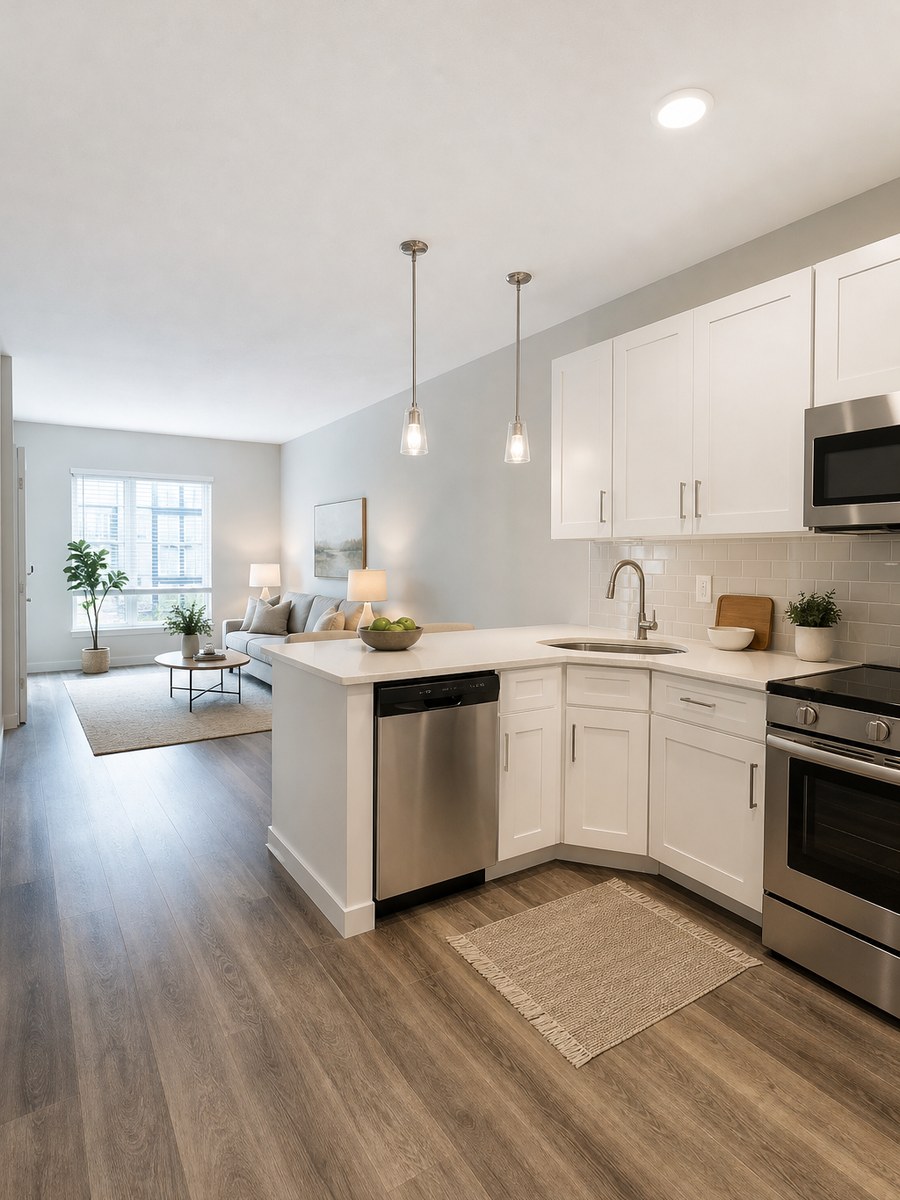
Materials that fail gracefully, fixtures any plumber can service, egress and sound separation that are not optional, and the zoning conversation that comes first.
Finishing a basement suite for a tenant, a garden unit, or a short-term rental is a different design problem than finishing one for yourself. You are not optimizing for how it feels on a Sunday morning. You are optimizing for what still looks good after eleven different people have lived in it.
“What should I use in a unit I am not living in?”
Materials that fail gracefully, fixtures that any plumber can service, and finishes you can repair in an afternoon between tenants. At ADS Building & Remodeling we build these for owners in Buffalo Grove, Arlington Heights, Glen Ellyn, Naperville, Wheaton, and Schaumburg. The spec below is what we would use in our own rental.
The Rule Behind Every Choice
In an owner-occupied home you optimize for peak experience. In a rental you optimize for the worst realistic day: a spilled pot of sauce, a dog with anxiety, a tenant who reports a leak two weeks late. Every material choice below assumes that day happens.
Flooring
Use: rigid-core luxury vinyl plank with a 20 mil or thicker wear layer, in a mid-tone with visible grain.
Waterproof, quiet, forgiving, and repairable plank by plank. Mid-tone with grain hides scratches and dust in a way that both very dark and very light floors do not. Skip carpet everywhere except bedrooms, and even there consider a hard surface with rugs the tenant supplies.
Avoid: hardwood in a rental basement, thin vinyl that dents under furniture legs, and any floor that needs refinishing between tenants.
Walls and Paint
Use: one neutral wall color, satin sheen, across the entire unit, plus semi-gloss on trim and doors.
One color means touch-ups are trivial and you keep a single five-gallon bucket in the utility room. Satin wipes clean. Flat paint in a rental hallway is a decision you regret at the first turnover.
Also: corner bead at high-traffic corners, and consider a chair-rail-height wall protection in the entry and hallway.
Kitchen
- Plywood-box cabinets in a simple painted or laminate door, not the cheapest particleboard, which fails under a leaking sink within two years
- Quartz counters, genuinely. Non-porous, no sealing, no tenant education required. Laminate is the budget alternative and it will show heat damage
- Mainstream appliances from a brand with local parts, in stainless or white. No panel-ready, no boutique brands, nothing that needs a specialist
- A ducted hood, because cooking odors are the number one complaint in multi-unit buildings
- Undermount sink with a single-lever faucet from a manufacturer that stocks cartridges at every hardware store
Bathroom
- Full waterproofing system, exactly as in an owner bathroom. Water damage in a rental costs more, because you find out later
- Porcelain tile floor, epoxy or high-performance grout, mid-tone
- A one-piece or tiled shower with a curb, not curbless. Curbless is beautiful and it depends on the user squeegeeing and closing the door
- Exhaust fan on a humidity sensor or a timer, so ventilation does not depend on habits
- Standard-height toilet from a major brand, with a supply valve that turns
Systems and Safety, Not Optional
- Egress. Any sleeping room below grade needs a compliant emergency escape opening: a net clear opening of at least 5.7 square feet, minimum 24 inches high and 20 inches wide, with the sill no more than 44 inches above the floor, and a window well you can climb out of.
- Smoke and carbon monoxide alarms, interconnected where required, and placed per code rather than per convenience.
- Separate shutoffs for the unit’s water, so a repair does not shut down the whole house.
- Sub-metering or a fair utility arrangement, decided before construction rather than after the first bill.
- Sound separation between units, which is the single most common source of tenant conflict. Insulation, resilient channel on the ceiling, and sealed penetrations.
The Zoning Conversation You Must Have First
Whether a second unit is permitted at all is a municipal question, and the answer varies by village and by lot. Some suburbs allow accessory units, some allow them only for family members, and some prohibit them outright. Kitchens are usually the trigger: a sink and a refrigerator read as an accessory space, a full range and a separate entrance often read as a second dwelling unit.
We check this at the design stage for every project of this type. Building a unit the village will not sign off on is the most expensive mistake in this category, and it also becomes a disclosure problem at resale.
What It Costs
Basement suite with bedroom, full bath, and kitchenette, in a dry basement: $60,000 to $130,000, including egress work and mechanical separation.
Refresh of an existing unit between tenants: $8,000 to $25,000 for flooring, paint, kitchen and bath fixtures.
Common Questions
Is it worth spending more on finishes to get higher rent?
Up to a point. Clean, bright, durable, and well-lit rents quickly. Luxury finishes in a rental rarely return their premium, with two exceptions: quartz counters and good lighting, both of which show in photographs and survive tenants.
Short-term rental instead?
Check your village’s rules first, several Chicago suburbs regulate or restrict them, and check your insurance. Construction-wise the spec is the same, with more emphasis on sound separation and durable soft goods.
Does a finished rental unit raise property taxes?
Permitted finished space is generally picked up on reassessment in Illinois. Your township assessor is the authority for your property.
Important Cost Note
These are planning ranges, not quotes, and zoning outcomes vary by municipality. At ADS the in-home consultation, including the zoning and egress feasibility conversation, is complimentary.
Thinking About an Income Unit?
If you are considering a rental unit or a long-term guest suite in Buffalo Grove, Arlington Heights, Glen Ellyn, Naperville, or a nearby Chicago suburb, start with the village rules and the egress question. Everything else is design.
At ADS Building & Remodeling, we provide:
- A complimentary in-home consultation and 3D rendering
- Zoning, egress, and code review before design is finalized
- A fixed-price quote that doesn’t move after you sign
- One accountable team, permits, inspections, and project management from demo to final walk-through
A rental unit built to a durable spec is boring to design and excellent to own. That is the correct trade.