The Staircase Is Probably the Last 1995 Thing in Your House
Iron, cable, glass, or a full rebuild. What is replaceable without touching structure, the code facts that shape design, and carpet-to-wood done properly.
In most suburban homes the staircase is the first thing you see from the front door and the last thing anyone thinks about renovating. It sits there in builder oak with turned spindles, quietly dating the entire house no matter what you do to the kitchen.
“Can the staircase be changed without rebuilding it?”
Usually yes. In the majority of homes we work in, the structure stays and everything you see gets replaced. At ADS Building & Remodeling we rebuild stairs for homeowners in Buffalo Grove, Arlington Heights, Glen Ellyn, Naperville, Wheaton, and Schaumburg, and this is the highest-visibility project per dollar in the house.
What Is Actually Replaceable
A staircase is stringers, treads, risers, and a railing system. The stringers are structure. Everything else is finish, which means:
- Carpeted stairs can usually be converted to wood treads and painted risers
- Spindles, newel posts, and handrails can be replaced entirely without touching the structure
- A closed stringer can often be opened up to an open side, though that is structural and requires design
- Skirt boards, wall paneling, and lighting are pure finish
The Four Directions People Go
Iron Balusters, Wood Rail
Typical cost: $4,000 to $12,000
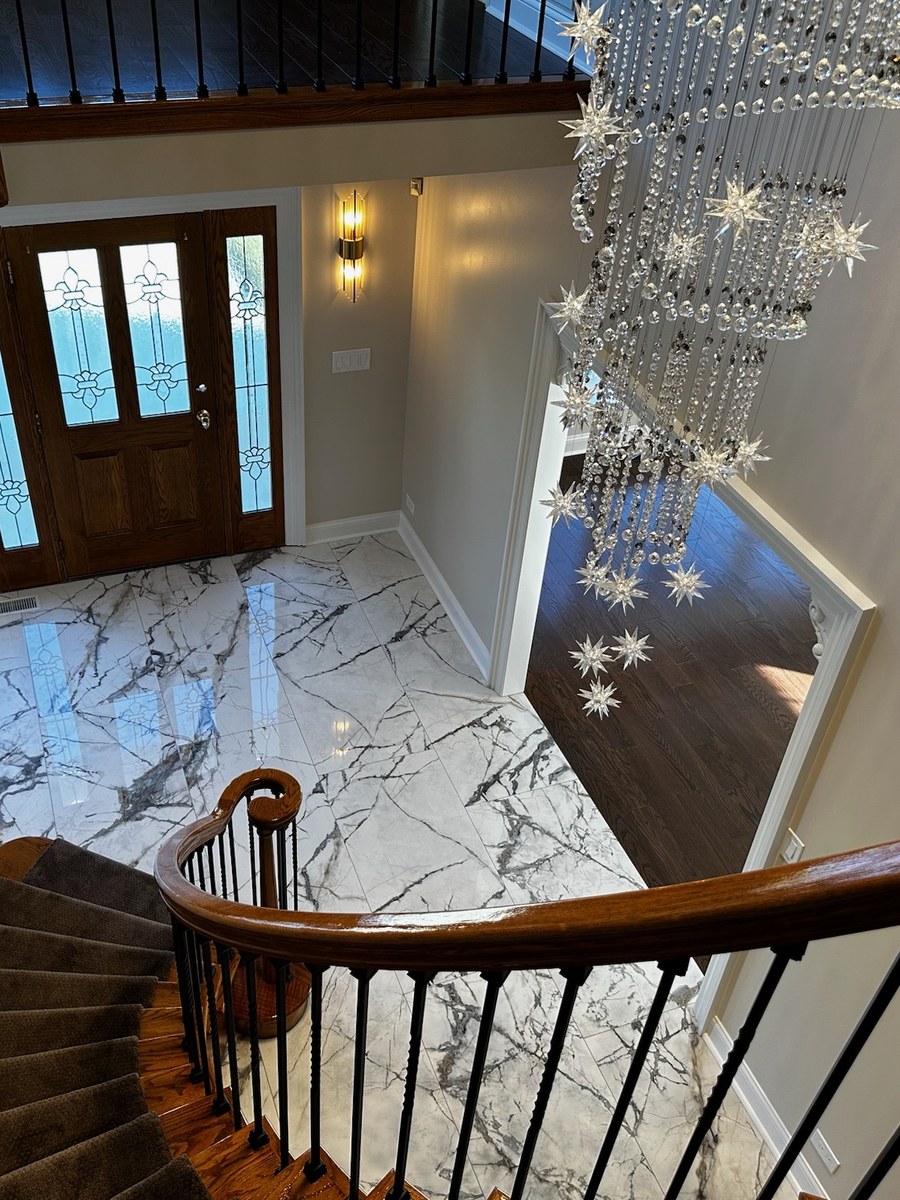
Removing oak spindles, drilling for iron balusters, and refinishing the rail in a darker stain or painting the newels. The most common upgrade and the most forgiving. It suits traditional and transitional houses, and it is entirely reversible.
Cable or Horizontal Metal
Typical cost: $8,000 to $20,000
Reads modern, keeps sight lines open, and works beautifully in a house that already has clean lines. Two cautions: horizontal elements are a climbing consideration with young children, and cable systems require substantial posts and correct tensioning, so it is not the place for a bargain installer.
Glass Panels
Typical cost: $12,000 to $30,000
Maximum openness and light. Fingerprints are the honest downside, and the hardware quality determines whether it looks architectural or looks like a shower door. Best in homes with a two-story entry where the stair is a sculptural object.
Full Rebuild With Open Risers
Typical cost: $25,000 to $60,000+
New stringers, floating or open-riser treads, and a design-driven railing. This is a structural project with engineering and permits. It transforms a house, and it belongs in a whole-floor renovation rather than as a standalone.
Details That Separate Good From Expensive-Looking
- Tread nosing and overhang consistent from top to bottom. The most common tell of a rushed job is treads that vary by an eighth of an inch.
- A skirt board that follows the stairs cleanly, with the base trim resolving into it rather than dying into the wall.
- Newel posts that feel solid. A post that flexes when you lean on it undermines everything else, and it is a mounting detail, not a materials one.
- Lighting. Step lights in the skirt or a wall wash on the stair wall. Almost nobody does this, and it makes an ordinary staircase look designed.
- The wall beside the stair. Paneling, a slat treatment, or simply art hung correctly on the rake. It is half of what you see.
The Code Facts That Shape Design
Handrail height, guard height, and the sphere rule are not stylistic choices. Guards along an open side generally need to be about 36 inches high in a residence, and the openings must not allow a 4 inch sphere to pass through, which is what sets baluster spacing. Handrails need a graspable profile and consistent height above the nosing.
These rules are why some magazine staircases cannot be built as drawn in a suburban home, and why an inspector will look closely at any railing that has been changed.
Carpet to Wood: The Details People Miss
Converting carpeted stairs to hardwood is one of our most requested projects, and it goes wrong in predictable ways.
Under the carpet, builder stairs are usually rough construction lumber, never meant to be seen. That means new treads and risers go over or replace them, not a sanding job. Squeaks get addressed while everything is open, which is the right moment and the only cheap one. And the transition at the top landing needs planning so the flooring, the nosing, and the trim meet cleanly.
Typical cost for a full carpet-to-wood conversion: $4,500 to $12,000 for a standard flight, more with a landing or a turn.
Common Questions
How long does a staircase project take?
A railing swap is 3 to 6 days. Treads and risers with refinishing is 1 to 2 weeks including cure time for finish. A structural rebuild is 3 to 6 weeks.
Can we use the stairs during the work?
Partially. There will be a day or two of restricted access during tread installation and finishing. In two-story homes we plan that window with the family in advance.
Do I need a permit?
For a cosmetic railing replacement, usually not, though some villages ask. For structural changes, open risers, or changing the stair layout, always.
Important Cost Note
Ranges are planning guides, not quotes. Flight length, turns, landings, and railing material drive the number. At ADS the in-home consultation, the design conversation, and the 3D rendering are complimentary.
Is Your Staircase the Last 1995 Thing Left?
If the kitchen and baths in your home in Buffalo Grove, Arlington Heights, Glen Ellyn, Naperville, or a nearby Chicago suburb are current and the entry still says builder-grade, the staircase is almost certainly the reason.
At ADS Building & Remodeling, we provide:
- A complimentary design consultation and 3D rendering
- Railing systems detailed and installed to code, with posts anchored properly
- A fixed-price quote that doesn’t move after you sign
- In-house crew, permits where required, and project management from start to final walk-through
Nothing else in a house changes the first impression as much for as little.