
A Mudroom Built for a Chicago Winter
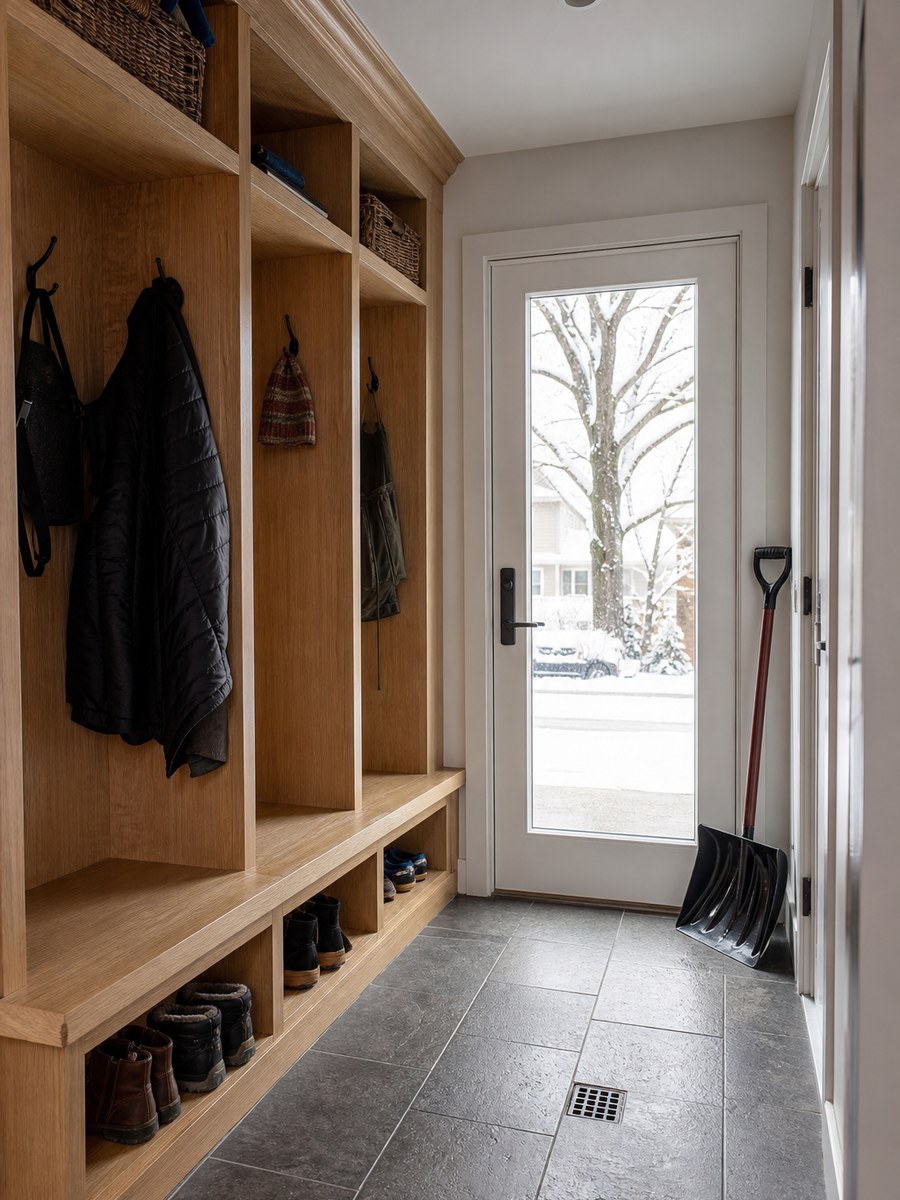
Floors that handle salt water, 15 to 18 inches of locker per person, boot dryer outlets, and where the space comes from when there is no obvious room.
From November to April, a Chicago house has a problem area, and it is the six feet inside the back door. Salt, slush, boots, coats, backpacks, dog towels, and the constant low-grade friction of a family trying to leave the house on time.
“Can you make this entry actually work in winter?”
Almost always, and rarely with an addition. At ADS Building & Remodeling we rebuild these entries for families in Buffalo Grove, Arlington Heights, Glen Ellyn, Naperville, Wheaton, and Schaumburg. A mudroom designed for a Midwest winter is a different room than the ones in national magazines.
Start With the Floor
Everything else is decoration if the floor cannot take salt water.
- Porcelain tile, through-body, with a textured or matte finish. Polished tile at a winter entry is genuinely dangerous when wet.
- Epoxy or high-performance grout, in a mid-tone color. White grout at a back door is a decision you regret by February.
- Heated floor mat underneath, $600 to $1,500 in a typical mudroom. It dries the floor between arrivals, which is the actual value, more than warmth underfoot.
- A pitched boot zone or a recessed tray so meltwater has somewhere to go rather than migrating to the hallway.
Luxury vinyl plank is a good second choice, warmer and cheaper, though it is less happy with grit ground in over years.
The Layout That Survives a Family
The mistake in most mudrooms is a single row of hooks at one height. Winter gear is bulky, wet, and belongs in zones.
Per Person: 15 to 18 Inches of Locker Width
Narrower than that and coats do not hang without crushing. Each locker gets a hook at adult height, a lower hook for kids, a shelf above, and a bin or drawer at the bottom for hats and gloves.
Open Cubbies, Not Doors
Doors get left open, which is worse than no doors. Open lockers with a bench seat get used correctly by children, which is the only real test.
Bench at 18 Inches, With Storage Under
Deep enough to sit and pull boots off, with either drawers or removable bins below. Boot storage should be ventilated, because sealed cabinets full of wet boots produce a smell that becomes part of the house.
A Landing Surface
Even 18 inches of counter or a shelf at hip height for keys, mail, and the bag you set down. Without it, the kitchen counter becomes the drop zone permanently.
Details Specific to a Chicago Winter
- A dedicated outlet for a boot dryer inside a locker base. Small detail, transformative for hockey and ski families.
- A utility sink if the space allows, for dog paws, muddy cleats, and the paint tray nobody wants in the kitchen.
- Good light at the door, including something on at all times in winter, when everyone leaves and arrives in the dark.
- Wall protection to about 4 feet, beadboard, slat wall, or scrubbable paint. Painted drywall at boot height fails in one season.
- A closet or hooks for guests, separate from the family lockers, or your guests will hang their coats on your kid’s hook and everything unravels.
- Weatherstripping and a proper threshold on the exterior door, which is not glamorous and is the reason the room is cold.
Where the Space Comes From
The Existing Back Hall
Typical cost: $6,000 to $15,000
Most common by far. Even a 4 to 6 foot run of wall becomes a full locker system with bench and storage. No structural work, no permits beyond electrical.
Borrowing From the Garage
Typical cost: $15,000 to $35,000
Taking 3 to 5 feet off the garage depth to create a real mudroom. This requires insulating a wall and floor that were never conditioned, moving the exterior door, and permits. Worth it in houses where the back hall is genuinely too tight.
Converting Part of the Laundry
Typical cost: $10,000 to $25,000
Combining laundry and mudroom works well when the room is generous. Keep the folding surface away from the boot zone, and give the room ventilation, because wet coats and a dryer in one small space produce humidity.
A Bump-Out Addition
Typical cost: $30,000 to $70,000
A 6 by 12 foot addition off the back or side. Foundation, roof, and exterior work make this the expensive option, and in some houses it is the only way to get a real entry.
Common Questions
How much space does a proper mudroom need?
A functional one starts at about 5 by 6 feet. A great one for a family of four is closer to 6 by 10. Below 5 feet of width, you are designing a very good hallway, which is still a big improvement.
Should the mudroom be heated?
It should be conditioned like the rest of the house, and a floor mat helps enormously. Rooms carved out of garage space especially need a heat source, or they become a cold spot that pulls warmth from the kitchen.
Does it add resale value?
In this climate, meaningfully. Buyers in the Chicago suburbs understand exactly what a real mudroom is worth by their second winter.
Important Cost Note
Ranges here are planning guides, not quotes, and depend on size, millwork, and whether structure or exterior work is involved. At ADS the in-home consultation, the layout study, and the 3D rendering are complimentary.
Dreading Another Winter at That Door?
If the entry in your home in Buffalo Grove, Arlington Heights, Glen Ellyn, Naperville, or a nearby Chicago suburb is the worst part of every winter morning, summer is when to fix it. Millwork lead times mean a project started now is finished long before the first snow.
At ADS Building & Remodeling, we provide:
- A complimentary design consultation and 3D rendering
- Custom lockers and benches built to your family, not to a catalog width
- A fixed-price quote that doesn’t move after you sign
- One accountable team, permits where required, and project management from start to final walk-through
Nobody photographs a mudroom for the internet. Everybody notices when theirs finally works.