
Materials That Survive Kids, Dogs, and Chicago Winters
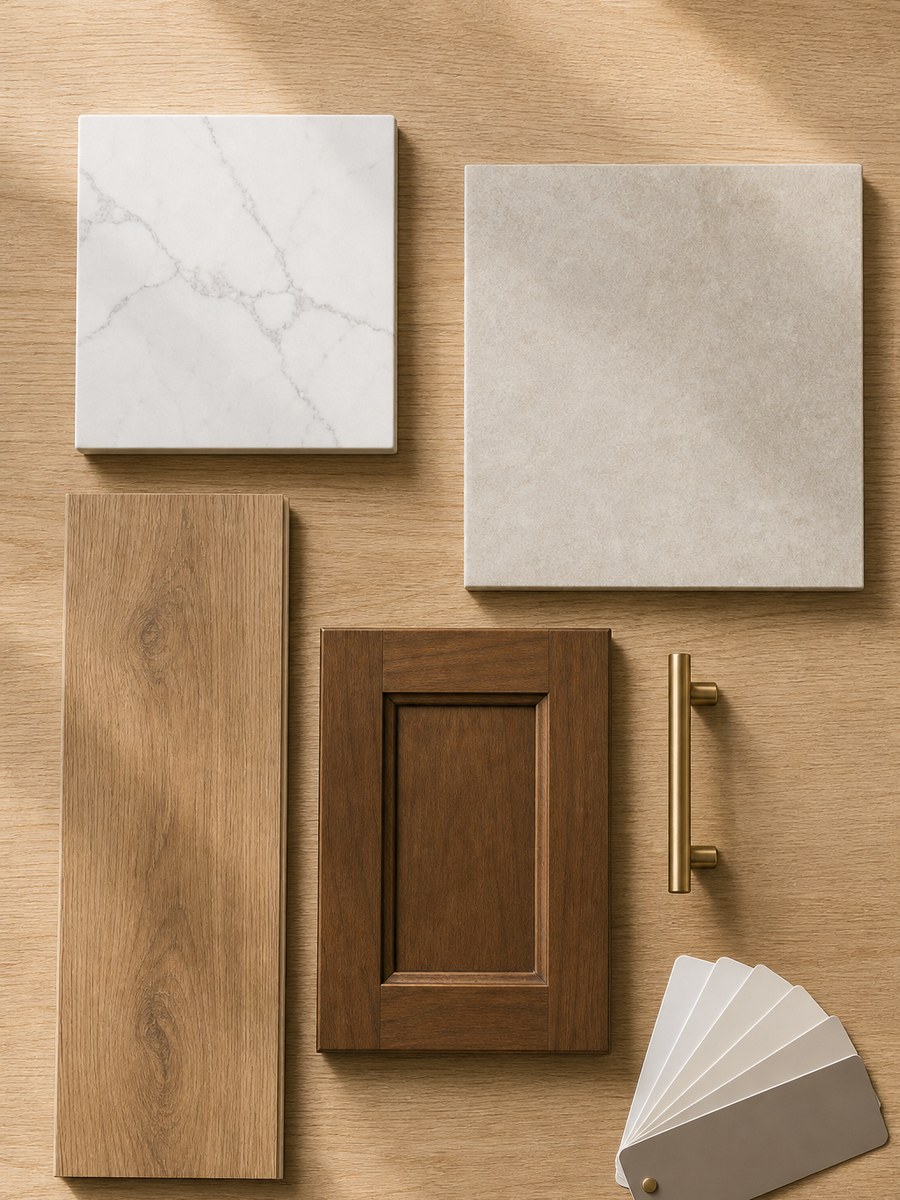
Quartz versus quartzite versus marble, which floors belong in which rooms, and the grout and finish choices that decide how a remodel looks in year five.
Showrooms are lit to sell. Everything looks flawless under a spotlight on a sample board the size of a paperback. Then it goes into a house with two kids, a dog with opinions about the back door, and a Chicago winter that drags salt and sand across the floor from November to April.
“Which materials actually survive a real family?”
The answer is not always the expensive one. At ADS Building & Remodeling we install these materials every week in homes around Buffalo Grove, Arlington Heights, Glen Ellyn, Naperville, Wheaton, and Schaumburg, and we also tear them out five and ten years later, which is a more honest education than any brochure.
Countertops
Quartz
What it is: engineered stone, ground quartz bound with resin. Typical installed: $65 to $120 per square foot.
The default recommendation for kitchens with children, and it deserves the reputation. Non-porous, so it does not need sealing, and it shrugs off wine, tomato sauce, and marker. Its one real weakness is heat. A pan straight off the burner can scorch the resin, and that damage does not polish out. Use a trivet and quartz will outlast your interest in the color you chose.
Natural Quartzite
Typical installed: $90 to $170 per square foot.
Harder than granite, genuinely beautiful, and heat tolerant. It needs sealing, and the category is loosely policed at the low end, where softer stones get sold under the quartzite name. Buy from a slab yard that lets you see the actual slab and ask for the material’s water absorption. Real quartzite is a lifetime counter.
Marble
Typical installed: $85 to $200 per square foot.
Etches from lemon juice and vinegar, stains from oil, and both begin in the first month. Marble in a working family kitchen is a choice to love a surface that will develop a history. Wonderful on a baking area or a powder room vanity. Rarely the right call for the island where homework and pasta sauce happen.
Butcher Block
Typical installed: $40 to $90 per square foot.
Warm, affordable, repairable with sandpaper, which is its real advantage. Keep it away from the sink unless you are willing to re-oil the area every few months. Excellent in a back pantry, an island seating overhang, or a laundry counter.
Flooring
Luxury Vinyl Plank
Typical installed: $5 to $12 per square foot.
The most practical floor for basements, mudrooms, and busy family levels in this climate. Waterproof, quiet, warm underfoot, and forgiving of dogs. Choose by wear layer thickness, not by price: 20 mil or better for a household with pets and children, and a rigid core product rather than a flexible one. Cheap vinyl telegraphs every imperfection in the subfloor and dents under furniture legs.
Porcelain Tile
Typical installed: $12 to $28 per square foot.
The most durable floor you can put in a bathroom, mudroom, or entry. Through-body porcelain hides chips. Large format tile with narrow grout lines is easier to keep clean than mosaic, and mosaic belongs in a shower floor where slip resistance matters. Pair it with a heated mat in a bathroom and the one complaint about tile disappears.
Site-Finished Hardwood
Typical installed: $12 to $22 per square foot.
Still the best floor for main living areas in a suburban home, and the only one that can be sanded and refinished decades from now. White oak in a matte or satin finish hides more than glossy or dark stain does, and dark stain in a house with a shedding dog is a daily commitment. Keep hardwood out of basements, where the slab moisture will eventually win.
Tile and Grout in Wet Areas
Two decisions matter more than which tile you pick.
Grout: use a high-performance cement grout with stain resistance, or epoxy where the surface takes real abuse, like a mudroom or a shower floor. Standard sanded grout in a light color in a family shower will look tired in two years no matter how you scrub.
Slip resistance: for a shower floor or an entry that meets Chicago snow, look at the coefficient of friction, not the finish name. Polished porcelain at a back door is a genuine hazard in February.
Cabinet Finishes
Painted: beautiful and the current default. Expect hairline cracks at the joints of painted wood doors as the house moves through heating season. This is normal, not defective, and touch-up is part of ownership. Factory finishes are far more durable than site painting.
Stained wood: forgiving in a way paint is not. Scratches blend, hands do not leave marks, and 2026 design has moved back toward natural wood tones, which makes this the easy choice again.
Thermofoil and laminate: excellent value and better than their reputation, with one caveat: heat delaminates thermofoil, so keep it away from ovens and toasters or specify a heat shield.
Hardware: brushed and satin finishes hide fingerprints. Polished chrome and unlacquered brass show every touch, which is either patina or annoyance depending on your temperament.
Paint That Survives a Hallway
Eggshell for walls in living areas, satin in kitchens, bathrooms, and hallways with kids, semi-gloss on trim and doors. Buy the better line from whichever brand you like: the difference between a builder-grade paint and a premium one shows up the first time someone wipes a wall, and it costs perhaps $150 across an entire project.
What We Would Choose for a House With Kids and a Dog
- Quartz counters, matte finish, with a butcher block section for baking
- White oak hardwood on the main floor, satin, medium tone
- Luxury vinyl plank with a 20 mil wear layer in the basement and mudroom
- Large format porcelain in bathrooms, heated, with epoxy grout in the shower
- Stained or factory-painted cabinets with full-extension drawers and soft close
- Satin paint in hallways, semi-gloss trim, one gallon of each stored in the basement for touch-ups
Common Questions
Is the expensive version always more durable?
No. Vinyl plank at $8 outperforms hardwood at $18 in a basement, and quartz outperforms marble at twice the price in a working kitchen. Durability is about matching material to the room, not about spending more.
What fails first in most remodels?
Grout in wet areas, cheap cabinet hardware, and flooring chosen for looks in a room where water lives. All three are avoidable at the selection stage for very little money.
Can I mix flooring between rooms?
Yes, and in most homes you should. Tile in the entry and mudroom, hardwood in living areas, vinyl in the basement. Just plan the transitions during design so thresholds land in doorways and heights work out.
Important Note
Prices here are typical installed ranges in the Chicago suburban market and move with material costs. The right specification depends on your rooms, your household, and how long you plan to stay. At ADS the in-home consultation and the selection conversation are complimentary, and we will tell you where spending more does nothing for you.
Choosing Materials for a Project?
If you are planning a remodel in Buffalo Grove, Arlington Heights, Glen Ellyn, Naperville, or a nearby Chicago suburb, make selections before demolition. It shortens the schedule and it eliminates the allowance surprises that inflate other people’s projects.
At ADS Building & Remodeling, we provide:
- A complimentary design consultation and 3D rendering
- Selections priced into the contract, with no open allowances
- A fixed-price quote that doesn’t move after you sign
- One accountable team, permits, and project management from demo to final walk-through
The best material is the one you stop thinking about the week after it is installed.