A Home Office That Does Not Look Like an Office
Sound first, then light and camera position, then cable planning. Where to put it, what it costs, and the millwork detail that keeps the printer off the desk.
Working from home stopped being temporary a while ago, and most of the rooms people work in are still improvised. A desk in a guest room, a monitor on a dining table, a corner of the basement with an extension cord running to it.
“Can I get a real office without it looking like an office?”
Yes, and the difference is mostly in three things nobody shops for: sound, light, and where the cables go. At ADS Building & Remodeling we build these for clients in Buffalo Grove, Arlington Heights, Glen Ellyn, Naperville, Wheaton, and Schaumburg, usually inside a room the house already had.
Sound Comes First
Every complaint about a home office is eventually a sound complaint. Either the house hears your calls or you hear the house.
- Insulate the interior walls. Batt insulation in a partition wall costs a few hundred dollars during construction and cuts a surprising amount of conversation-range noise.
- Solid-core door with a full perimeter seal and a threshold. The single biggest improvement per dollar. A hollow-core door is a drum with a doorknob.
- Seal the penetrations. Outlets back to back in a shared wall, and unsealed can lights, are direct sound paths.
- Something soft in the room. A rug, drapery, upholstered chair, or a fabric panel behind the desk. A hard-surfaced room makes you sound like you are in a stairwell on every call.
Typical cost for the sound package during a build-out: $1,200 to $4,000.
Then Light, and the Camera
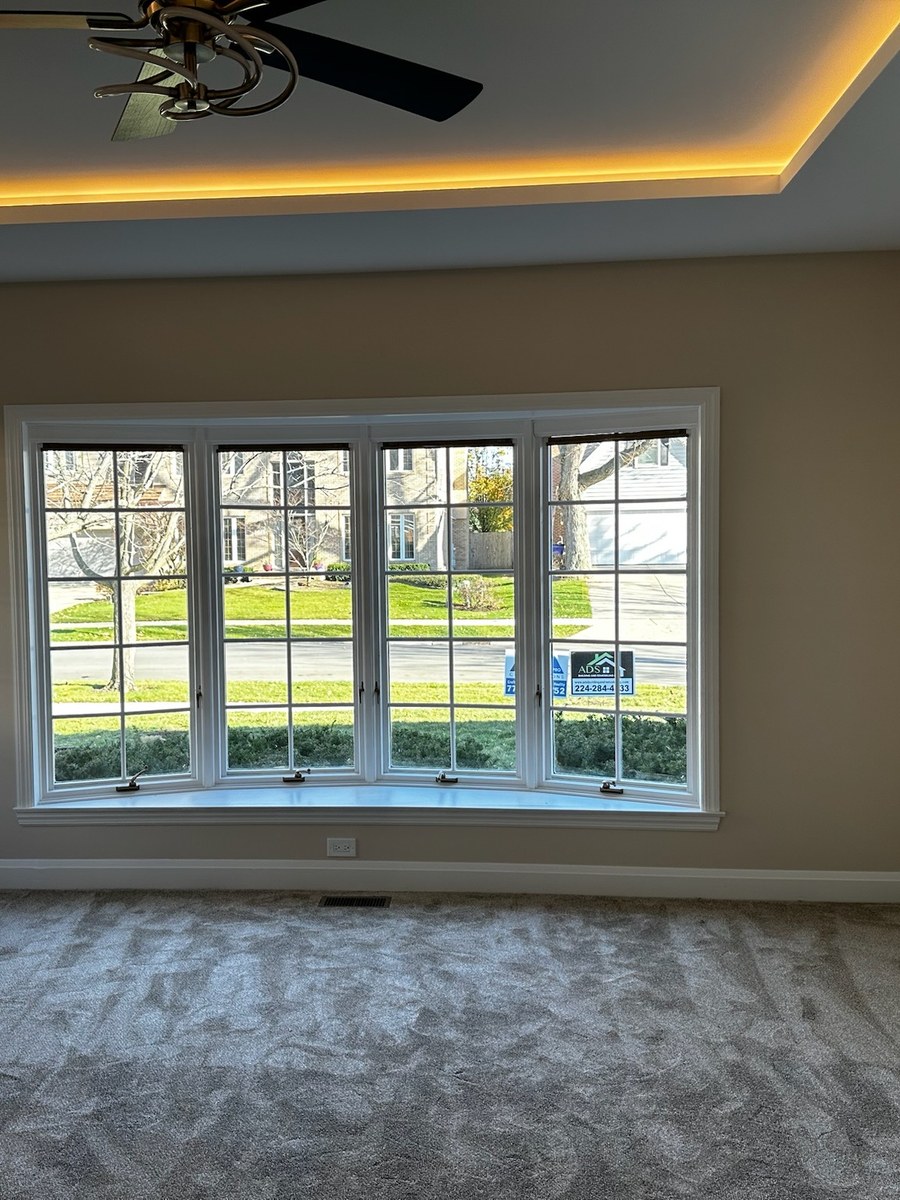
Position the desk so a window is to the side, not behind you and not directly in front. Behind you and you are a silhouette on every call. In front and you squint all afternoon.
What actually works:
- Window at 90 degrees to the screen, with a light-filtering shade for the hours it is harsh
- An overhead on a dimmer, plus a lamp at desk height for the evening
- A wall behind you that looks intentional: paneling, shelving, or a simple color. This is your background for hundreds of hours a year
- Bulbs at 3000K with CRI 90 or better, so skin tone reads correctly on camera
The Cables Question
The visual difference between a nice office and a hobby setup is cable management, and it is planned, not tidied.
- An outlet and data drop inside the desk cabinetry, not on the wall behind it
- A grommet or a wire chase through the desk surface, with a tray underneath
- Hardwired ethernet to the office, even in a strong wifi house, for the day the video call matters
- A dedicated circuit if the room will hold multiple monitors, a printer, and a space heater in January
- A small ventilated cabinet for the modem, router, and anything with blinking lights
Where to Put It
The Formal Dining Room or Living Room
Typical cost: $8,000 to $25,000
The most common conversion we do now. These rooms are near the front of the house, they have good windows, and in many families they are used a few times a year. Adding a door is the key move, and it is what keeps it convertible back later.
A Spare Bedroom
Typical cost: $6,000 to $18,000
Already has a door and a closet. Built-in desk and shelving along one wall, closet converted to supply storage or left intact for resale flexibility.
The Basement
Typical cost: $12,000 to $30,000 as part of a finish
Quiet by nature, which is the advantage. The disadvantage is light, so plan the lighting seriously and use an egress window if there is one. A basement office with poor lighting does not get used in February.
A Two-Person Office
Typical cost: $15,000 to $40,000
Increasingly common. Desks back to back or on opposite walls, with an acoustic panel between them, and a rule about which one takes calls in the room. Design it as two workstations, not one desk with a guest chair.
The Millwork That Makes It Look Built-In
The reason a custom office reads as part of the house: the desk is cabinetry rather than furniture. A run of base cabinets with a solid top, upper shelving on either side of a window, and a return that wraps a corner. Same visual language as the kitchen, different room.
One detail worth insisting on: a real drawer for the printer at knee height, on full-extension slides, so the ugliest object in the room is never on the desk.
Common Questions
Does a home office add resale value?
A room with a door that can be an office or a bedroom adds value. A room permanently built out with fixed desks in a way that cannot convert can narrow the buyer pool. Build it beautifully and reversibly.
Do I need a permit?
For millwork and paint, no. For new circuits, data, structural changes, or converting a space that was not habitable, generally yes.
What about soundproofing an existing office?
Door, seals, and absorption get you most of the way without opening walls. Full isolation requires drywall work, so it belongs in a remodel rather than a weekend.
Important Cost Note
Ranges here are planning guides, not quotes, and depend on millwork, electrical scope, and whether walls or doors change. At ADS the in-home consultation, the design conversation, and the 3D rendering are complimentary.
Still Working at the Dining Table?
If you are working from home in Buffalo Grove, Arlington Heights, Glen Ellyn, Naperville, or a nearby Chicago suburb and the setup is still temporary after several years, it is probably time to make it a room.
At ADS Building & Remodeling, we provide:
- A complimentary design consultation and 3D rendering
- Sound, light, power, and data planned together before millwork is built
- A fixed-price quote that doesn’t move after you sign
- One accountable team, permits where required, and project management from start to final walk-through
The best home office does not look like an office. It looks like a good room that happens to work.