
Fifteen Places to Find Storage in a House You Already Own
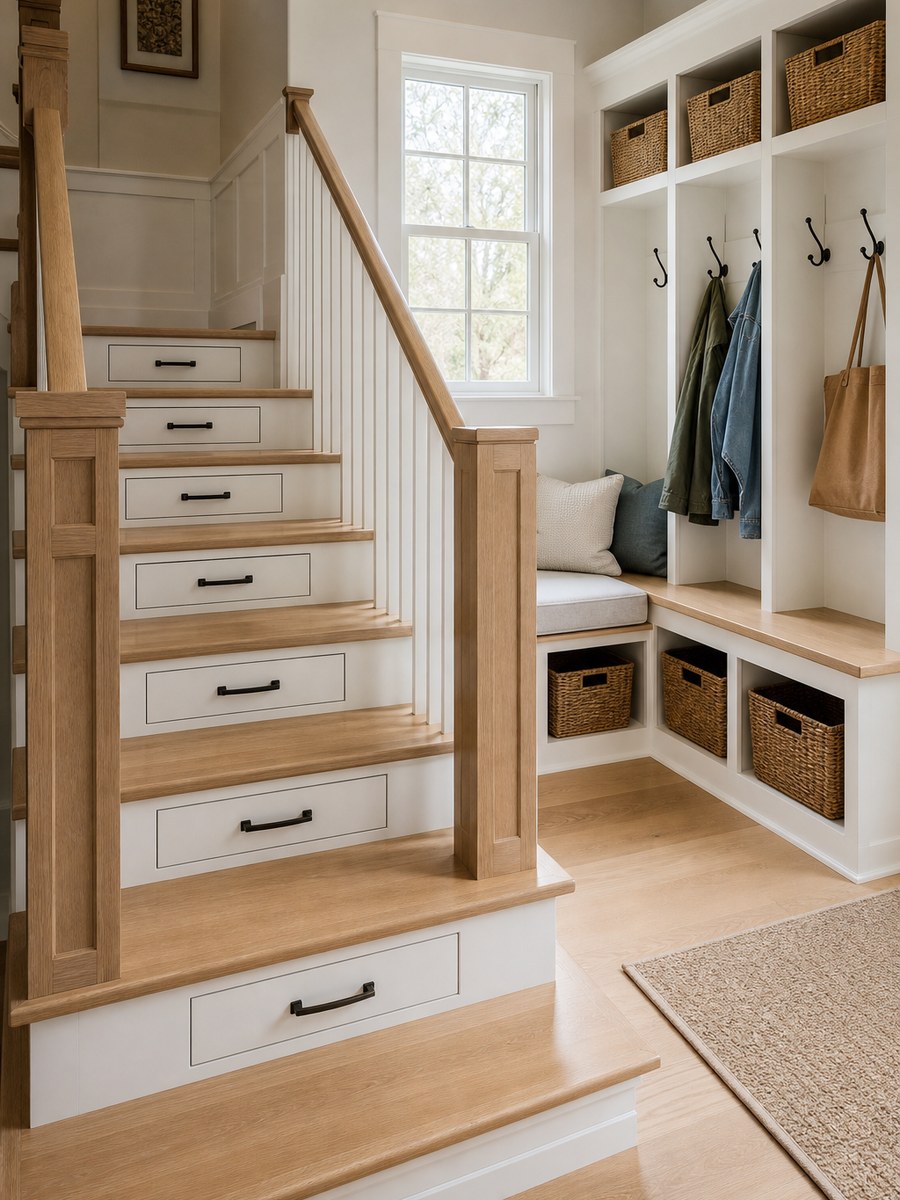
Under the stairs, inside the risers, between the studs, in the toe kick. Where the space hides in a typical suburban home and what it costs to claim it.
Nobody moves because they need more space. They move because they need more places to put things, which is a different problem with much cheaper solutions.
“Where would you find storage in a house like mine?”
In a typical Chicago suburban home, in about fifteen places. At ADS Building & Remodeling we walk houses in Buffalo Grove, Arlington Heights, Glen Ellyn, Naperville, Wheaton, and Schaumburg, and this is the list we run through, roughly in order of value per dollar.
Places Almost Every House Has
1. Under the Stairs
The classic. Usually finished as a closet with a single hanging rod, which wastes the geometry. Built as graduated pull-out drawers or a series of cabinet doors along the slope, the same space holds three times as much and everything is reachable.
Typical cost: $2,500 to $8,000
2. Inside the Staircase Itself
Drawers built into the risers. It is a showpiece as much as storage, ideal for shoes, gloves, and the things that pile up at the bottom of the stairs anyway.
Typical cost: $3,000 to $9,000
3. The Wall Cavity Between Studs
Three and a half inches of depth is enough for spices, medicine, cleaning supplies, or a shallow linen niche. Between any two studs in a non-load-bearing wall, with no structural work, you get real storage where a wall used to be.
Typical cost: $600 to $2,000 per niche
4. Above Doorways
The 18 to 24 inches above an interior door are dead space in every house. A shelf or small cabinet run there in a hallway, pantry, or laundry holds the things you use twice a year.
5. Toe Kicks
Four inches under every base cabinet. Toe-kick drawers are shallow, they are perfect for baking sheets and platters, and most people have never seen one.
Typical cost: $300 to $700 per drawer
6. The Dead Corner
Every kitchen has a corner cabinet that swallows things. Replacing the interior with a modern pull-out system converts it from a cave into usable shelving without touching the box.
7. Over the Refrigerator and Above the Upper Cabinets
If your uppers stop short of the ceiling, that gap is holding dust. Extending cabinetry to the ceiling adds storage and, more importantly, makes the kitchen look designed rather than assembled.
8. Under Window Seats
A bench at a bay window or in a bedroom nook, with drawers or a lift-top. It creates seating and storage in a footprint that was doing neither.
Typical cost: $2,000 to $6,000
9. The Space Beside the Refrigerator
A 6 to 12 inch gap that usually gets filled with a filler panel. A vertical pull-out for trays, wraps, and bottles turns it into the most-used cabinet in the kitchen.
10. Basement Stair Walls
Shallow shelving along the stairwell wall, sized for pantry overflow and paper goods. Cheap millwork, and it keeps the basement from becoming a storage room.
11. Garage Ceiling and Walls
Overhead platforms above the garage door track and a real wall system rather than a random shelf. Getting seasonal items off the floor is what makes a two-car garage hold two cars.
Typical cost: $1,500 to $5,000
12. Knee Walls in Upstairs Rooms
In cape cods, dormered colonials, and finished attics, the sloped walls hide substantial space behind them. Access doors and rolling bins turn it into legitimate storage rather than a place you never open.
13. The Laundry Room
A counter over front-loading machines, a hanging rod above it, and a cabinet run. The laundry is the most under-designed room in most houses and one of the cheapest to fix.
Typical cost: $2,500 to $7,000
14. The Mudroom That Is Really a Hallway
Even 4 feet of wall by the back door supports a bench, hooks, cubbies, and a boot tray. Everything a family drops at the door lands somewhere on purpose instead of on the floor.
15. Vanity Bases
Most bathroom vanities are doors with a shelf and a pipe in the middle. Replacing the interior with U-shaped drawers around the plumbing doubles usable space in the room where clutter is most visible.
The Rule That Makes Storage Work
Storage only helps when it is where the mess happens. A beautiful cabinet in a room nobody uses solves nothing. Before designing anything, we ask where things actually pile up: the counter by the door, the dining table, the corner of the bedroom. Then we build the storage there, at the height of the person who uses it, with no doors to open if speed matters.
Common Questions
Is custom millwork worth it compared with store-bought organizers?
For closets and garages, good systems from a store are excellent value. For anything that has to fit an odd space, match existing trim, or look like part of the house, custom is the only thing that reads correctly.
Do built-ins add resale value?
Well-executed built-ins in main living areas read as quality and photograph well. Overly specific ones, like a built-in desk in a formal dining room, can narrow the appeal. Keep them flexible.
Can these be done without a full remodel?
Most of them, yes. Niches, toe-kick drawers, benches, and shelving are one-to-five-day projects.
Important Cost Note
Ranges above are typical for the Chicago suburbs and depend on materials, finish, and access. At ADS the in-home consultation, including the walk where we point at walls and tell you what is behind them, is complimentary.
Running Out of Room?
If your house in Buffalo Grove, Arlington Heights, Glen Ellyn, Naperville, or a nearby Chicago suburb feels small, it is worth an hour with someone who builds for a living before you call a realtor.
At ADS Building & Remodeling, we provide:
- A complimentary in-home consultation and 3D rendering
- Custom millwork built and finished to match your existing trim
- A fixed-price quote that doesn’t move after you sign
- One accountable team, permits where required, and project management from start to final walk-through
Most homes are not too small. They are just built with nowhere to put anything.