
Custom Millwork: What Actually Reads as Luxury
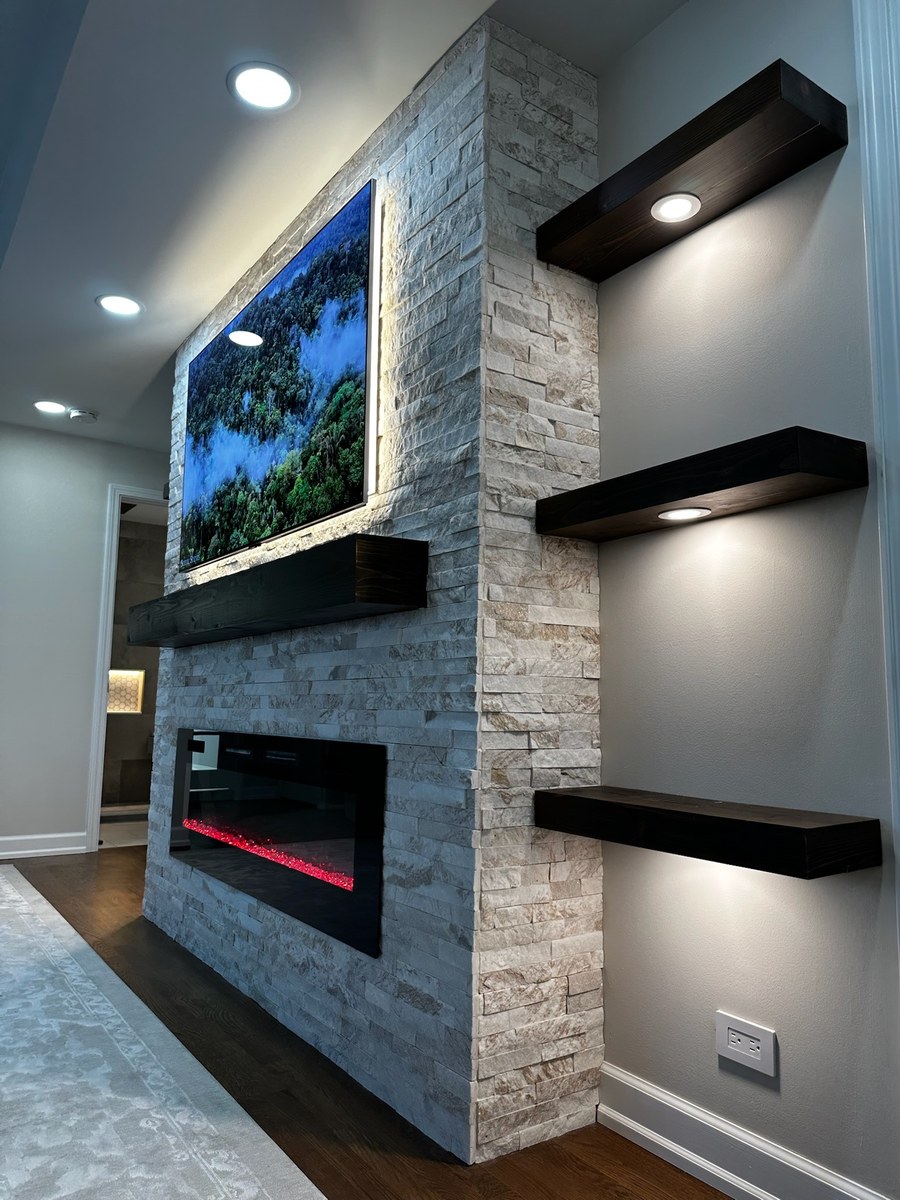
Cabinetry that meets the ceiling, integrated appliances, consistent reveals, and trim that resolves. Where millwork earns its cost and where people overspend.
Walk into an expensive house and try to name what makes it feel expensive. It is rarely the countertop. It is that the woodwork looks like it grew there: cabinetry that meets the ceiling correctly, a fireplace wall with no visible seams, trim that turns a corner the way it should.
“What actually separates a high-end interior from a nice one?”
Millwork, and the patience to detail it. At ADS Building & Remodeling we build custom millwork for homes in Buffalo Grove, Arlington Heights, Glen Ellyn, Naperville, Wheaton, and Schaumburg, and this is where the money is visible for the next twenty years.
The Four Details That Read as Quality
Cabinetry That Meets the Ceiling
Uppers that stop 14 inches short with a dust shelf above them are the single most common tell of a builder kitchen. Running cabinets to the ceiling, with a crown or a flush reveal, changes the proportions of the room. In a house with 9 foot ceilings, stacked uppers with glass fronts on the top tier is the classic move.
Integrated Appliances and Panel Fronts
A refrigerator and dishwasher wearing cabinet panels disappear. What remains is a wall of cabinetry rather than a row of appliances. Panel-ready appliances cost more, and the installation tolerances are tighter, but nothing else buys that particular calm.
Consistent Reveals
The gaps. Between doors, around panels, where cabinetry meets trim. A high-end interior keeps them identical everywhere, and the eye reads that consistency as expensive without ever identifying why. This is entirely a craft and layout question, not a materials question.
Trim That Resolves
Every piece of trim has to end somewhere. In ordinary work it dies into a wall or gets caulked into submission. In good work it returns on itself, meets a plinth block, or transitions at a logical break. Look at the base where it meets a stair skirt. That joint tells you everything about who built the house.
Where Custom Millwork Earns Its Cost
The Fireplace Wall
Typical range: $6,000 to $25,000
Flanking cabinetry, a floating mantel, integrated wiring, and a surround in stone, tile, or plaster. It is the focal point of the main floor and it is one project rather than a whole-room renovation.
The Entry and Mudroom
Typical range: $4,000 to $18,000
Lockers, bench, hooks, drawers, and a drop zone. High use, high visibility, and it is the first thing anyone sees.
Library or Office Walls
Typical range: $8,000 to $30,000
Floor to ceiling shelving with a ladder or integrated lighting, a desk built into the run, and cable management inside the cabinetry. Working from home became permanent for a lot of people, and this is what the good version looks like.
Wall Paneling and Wainscot
Typical range: $40 to $120 per linear foot depending on complexity
Applied moulding panels in a dining room, a slat wall behind a bed, or a full raised-panel wainscot in an entry. This is the cheapest way to make a plain room feel considered.
Ceiling Treatments
Typical range: $3,000 to $20,000
Coffered, beamed, or a simple tray with a cove. In rooms with adequate height it adds the dimension that photographs love. In an 8 foot ceiling it usually makes the room feel lower, and we will say so.
Material Choices That Age Well
- White oak, rift or quarter sawn, in a matte finish. The current default in high-end work for good reason: it takes light beautifully and it does not read as a specific decade.
- Walnut, used sparingly, for an island face or a single accent wall. Expensive, and a little of it goes a long way.
- Painted poplar or MDF for trim and paneling that will be painted. Stable, sharp edges, and far cheaper than painting a hardwood nobody will see.
- Veneered panels for large flat areas, because solid wood that wide will move with the seasons and open at the joints.
Where People Overspend
Three patterns we talk clients out of regularly:
Ornate profiles in a simple house. A heavy Victorian casing in a 1975 ranch fights the architecture. The house wins that argument every time.
Millwork in rooms nobody enters. Paneling a formal living room that the family passes through twice a year is money that would transform the kitchen or the entry.
Species-driven decisions. Paying for solid walnut on a surface that will be painted or hidden. Spend on visible faces, use sensible materials behind them.
Common Questions
Custom-built on site or shop-built?
Shop-built and finished for cabinetry, because a controlled spray finish beats anything applied in a dusty house. Built on site for anything that has to follow an out-of-square wall or an old ceiling, which in older homes is most trim work.
How long does custom millwork add to a schedule?
Typically 4 to 8 weeks of shop time, running parallel to other work. It belongs in the earliest ordering conversation, not the last.
Can millwork be added to a finished room?
Yes, and it is one of the best standalone projects there is. A fireplace wall or an office build-out takes about a week on site.
Important Cost Note
Ranges are planning guides, not quotes. Species, finish, complexity, and wall conditions all move the number. At ADS the in-home consultation, the design conversation, and the 3D rendering are complimentary.
Want the Rooms to Feel Finished?
If you are planning work in Buffalo Grove, Arlington Heights, Glen Ellyn, Naperville, or a nearby Chicago suburb and the house feels plain rather than dated, millwork is usually the answer rather than another round of paint.
At ADS Building & Remodeling, we provide:
- A complimentary design consultation and 3D rendering
- Millwork detailed to your existing trim and ceiling heights
- A fixed-price quote that doesn’t move after you sign
- One accountable team, permits where required, and project management from start to final walk-through
Luxury in a house is mostly restraint plus precision. Precision is what millwork sells.